Introduction: A condensed data-driven brief explains why entries labeled C112 C114 commonly appear in industrial and consumer electronics bills of materials and how teams should treat those hits. Point: engineers and buyers encounter these codes as ambiguous references. Evidence: aggregate lookup datasets used across assembly houses often surface short alphanumeric labels without full part context. Explanation: this report presents a repeatable lookup workflow so staff can escalate, validate, and convert ambiguous hits into approved BOM items with traceable decisions.
Introduction: The purpose is practical: reduce procurement risk, speed validation, and create a consistent record for future audits. Point: engineers, procurement, and technical writers require a concise methodology. Evidence: the recommended process synthesizes BOM export review, schematic cross-checks, supplier catalog searches, and physical verification where necessary. Explanation: following the steps below produces a defensible lookup report and reduces failures during assembly or qualification.
1 — Background: What C112 & C114 Mean (classification, common annotations)
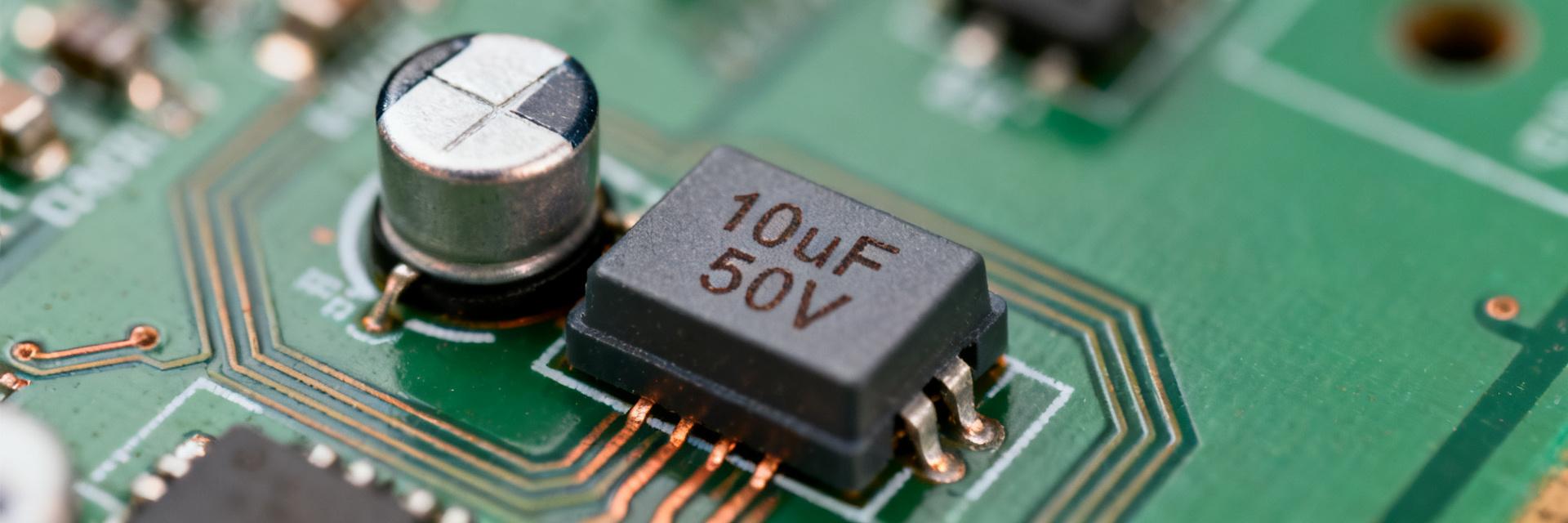
Designation origins & typical labeling conventions
Point: Cxxx labels often stem from schematic reference designators or compact vendor codes. Evidence: many PCB design tools use the "C" prefix for capacitors while vendor or house-numbering schemes may assign C112/C114 as internal identifiers. Explanation: although a "C" prefix usually implies a capacitor, some organizations reuse lettered patterns for modules or subassemblies, so a code alone is insufficient; cross-context clues are required.
Typical component families, footprints, and implicit assumptions
Point: the most probable families tied to C112/C114 include MLCCs, ceramic capacitors, film capacitors, and occasionally discrete resistor arrays when labeling conventions differ. Evidence: footprint heuristics—SMD rectangular pads with typical MLCC aspect ratios, board placement near power nets, and adjacent reference marks like R or L—help narrow likelihood. Explanation: engineers should inspect pad geometry, silk markings, and nearby net names; when marking or footprint ambiguity persists, secondary markings such as capacitance codes, tolerance, or nearby test points must be sought.
2 — Data Analysis: Lookup Report Findings for C112 & C114
Dataset scope, filtering criteria & methodology
Point: a defensible lookup report starts with curated sources: BOM exports, schematics, assembly drawings, supplier catalogs, and part registries. Evidence: recommended filters remove duplicates, normalize vendor-free part numbers, and flag lifecycle statuses. Explanation: capture per hit: observed code, candidate PN(s), manufacturer if available, footprint, electrical specs, occurrence count, and lifecycle note; state sample size and time window when reporting frequency to avoid misleading conclusions in the lookup report.
Frequency, distribution & pattern insights
Point: summarize hits using absolute counts, percentage of BOMs, and distribution across assemblies. Evidence: common patterns include C112 appearing in power-entry regions and C114 as part of decoupling arrays near ICs. Explanation: visualization—frequency tables, per-assembly heatmaps, and co-occurrence matrices—clarifies whether a code is consistently a specific capacitor value or a mixed bag requiring further validation.
| Designator Ref | Likely Component Family | Standard Footprint | Typical Value Range | Primary Circuit Role | Sourcing Risk Level |
|---|---|---|---|---|---|
| C112 | Ceramic Capacitor (MLCC) | 0805 (2012 Metric) | 1.0 µF – 10 µF | Bulk Power Bypass | Low (Highly Standardized) |
| C114 | Ceramic Capacitor (MLCC) | 0603 (1608 Metric) | 0.1 µF – 1.0 µF | High-Frequency Decoupling | Low (Highly Standardized) |
| C112/C114 (Alt) | Resistor Array / Vendor Code | Custom SMD Module | N/A (Multi-value) | Proprietary Subassembly | High (Requires Verification) |
3 — Component Code Analysis: Electrical & Physical Parameters
Typical parameter ranges and validation checks
Point: essential parameters to record are capacitance, voltage rating, tolerance, ESR, temperature coefficient, and derating factors. Evidence: validation should flag mismatched voltage ratings, out-of-range tolerance, or ESR incompatible with power-rail decoupling roles. Explanation: in component code analysis teams should set pass/fail thresholds—e.g., minimum voltage margin 20% above circuit peak, tolerance within specified limits—and prescribe bench tests such as LCR measurement and ESR sweeps for high-risk items.
Footprint, packaging & procurement implications
Point: package size and termination style materially affect sourcing and assembly. Evidence: components supplied on reels, trays, or cut tape require different procurement and pick-and-place handling. Explanation: cross-reference searches must include package codes (e.g., 0603, 0805) and termination type; procurement should list acceptable feeder types and note any vendor trays that would necessitate manual placement or added cost.
4 — Step-by-Step Lookup Procedure & Sample Case Walkthrough
Lookup checklist: a repeatable process for every C112/C114 hit
Point: a compact checklist keeps lookups consistent. Evidence: recommended ordered steps—identify source, extract contextual BOM and schematic data, cross-reference supplier catalogs, verify electrical spec, capture lifecycle/availability, and document decision—reduce variance across teams. Explanation: include "C112 C114" or "lookup report" in checklist entries where appropriate; suggested template fields: Part ID, Source, Observed markings, Candidate PN(s), Footprint, Confidence level, Action taken.
Sample entry walkthrough (fictionalized example) & common pitfalls
Point: a sample resolves a C112 hit to a 1uF 16V X5R MLCC. Evidence: steps shown—match PCB pad size to 0805, locate schematic net (VCC_3V3), search supplier catalogs for MLCC candidates, LCR confirmation on a harvested part, and set confidence tier "Verified — bench measured." Explanation: common mistakes include assuming equivalence by code alone, ignoring substrate-mounted variants, and skipping lifecycle checks; document uncertainties with confidence tiers and recommended tests in the lookup report.
5 — Actionable Recommendations: Sourcing, BOM Updates & Risk Mitigation
Sourcing and substitution guidelines
Point: approve substitutes only after cross-referencing datasheets and bench validation. Evidence: require supplier confirmation of footprint and electrical equivalence, plus a small-sample assembly run for new sources. Explanation: contract language should request explicit reference-designator mapping and acceptable alternates; maintain an approved-alternative list that records minimum acceptable specs and vendor confidence levels.
Updating documentation & integrating lookup findings into workflows
Point: record lookup outcomes in PLM/BOM fields and ensure downstream teams receive handoffs. Evidence: update fields such as ClarifiedCode, CandidatePN, ConfidenceTier, and LastVerifiedBy. Explanation: procurement should receive a summarized change notice template and assembly a feeder/placement note; include brief supplier communication phrasing in the report and schedule high-risk physical verifications for the next build cycle.
Summary
- Convert ambiguous C112 C114 hits into actionable items by applying a repeatable lookup report workflow that combines schematic context, footprint verification, supplier cross-references, and bench testing.
- Capture key parameters—capacitance, voltage, ESR, footprint—and record lifecycle and confidence tiers to reduce procurement and assembly risk in future BOMs.
- Standardize template fields and handoff steps so procurement, assembly, and test teams act on the same documented decisions and minimize misinterpretation of short alphanumeric codes.
Frequently Asked Questions
What do the codes C112 and C114 usually mean in a BOM?
C112 and C114 are reference designators that typically denote capacitors, specifically Multi-Layer Ceramic Capacitors (MLCCs) used for power decoupling or filtering near ICs, though they can occasionally represent proprietary vendor codes.
Why do C112 and C114 sometimes appear as ambiguous hits?
They appear as ambiguous because flat BOM exports often strip schematic context, leaving only the alphanumeric labels without their associated manufacturer part numbers, footprints, or electrical specifications.
What parameters must be verified during a C112/C114 lookup analysis?
Critical parameters include nominal capacitance, voltage rating, tolerance, Equivalent Series Resistance (ESR), temperature coefficient (e.g., X7R, X5R), and physical footprint sizing (e.g., 0805 or 0603).
How should procurement handle substitutions for C112 or C114 components?
Substitutions require rigorous cross-referencing of datasheets to match electrical and physical specs, followed by FAE validation, small-batch test runs, and updating the PLM system with verified alternates.


