Point: Accurate component data drives first-pass success in hardware design. Evidence: Recent industry surveys report that roughly 35–40% of prototype delays stem from incorrect interpretation of component documentation. Explanation: Engineers and buyers who verify the C112 10B013 050 10 datasheet early reduce rework, sourcing errors, and reliability surprises; this article delivers full specs, pinout, package data, test guidance, and an integration checklist to streamline validation and procurement.
1 — Quick product overview (background)
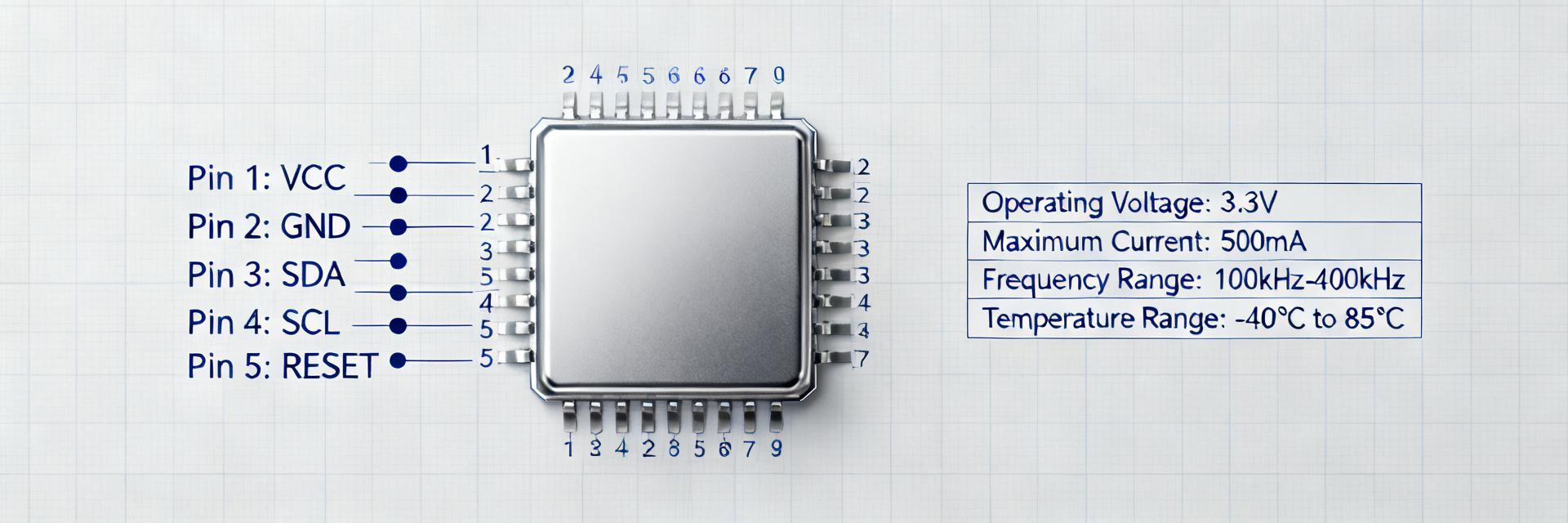
Point: A clear part-number decoding and application context save time at the spec stage. Evidence: Manufacturers typically encode family, series, variant, and ratings into segmented part codes. Explanation: The following breakdown and short application notes help teams shortlist the C112 10B013 050 10 candidate and flag items to confirm on the original datasheet.
Part-number breakdown & common identifiers
Point: Parsing the code prevents mis-picks during BOM entry. Evidence: Typical segment mapping is shown in the table below and should be verified against the official manufacturer datasheet. Explanation: Use this as a guide—treat suffixes and revision codes as procurement-critical.
| Segment | Typical meaning |
|---|---|
| C112 | Product family / core topology |
| 10B013 | Series and internal variant / performance grade |
| 050 | Rating (e.g., voltage/current or package size) |
| 10 | Revision, lot or temperature class suffix |
Typical applications & target markets
Point: Matching part to system reduces late-stage redesign. Evidence: Parts with similar naming are often used in power modules, signal conditioning, or sensing front-ends; check the datasheet for confirmation. Explanation: Confirm power rating, switching speed, and temperature range before committing—likely targets include industrial controls, instrumentation, and embedded power supplies.
Use-case summary: Suitable for medium-power embedded designs requiring robust thermal handling; industries: industrial automation, test equipment, and avionics-adjacent systems where traceability is required.
2 — Complete electrical specifications (data analysis)
Point: Electrical specs dictate safe operating envelopes. Evidence: Extract absolute limits and recommended operating points to drive design margins. Explanation: Below are tables and notes to standardize datasheet extraction for the C112 10B013 050 10.
Absolute maximum ratings & derating guidance
Point: Absolute limits prevent catastrophic failures. Evidence: Record Vmax, Imax, Tj/Tstg, power dissipation, and surge limits with units and test conditions. Explanation: Include derating guidance (e.g., % power reduction per °C above reference) and a note on reading manufacturer derating curves when designing for extended life.
| Parameter | Value (example) | Units / Conditions |
|---|---|---|
| Vmax | see datasheet | DC, no fault |
| Imax | see datasheet | steady-state |
| Tj / Tstg | −40 to +125 | °C unless noted |
| Power dissipation | part & package dependent | Pd @ Tamb / with heatsink |
Recommended operating conditions & typical performance
Point: Recommended ranges define expected real-world behavior. Evidence: Capture supply ranges, operating currents, timing specs, and environmental limits with both typical and guaranteed columns. Explanation: Use typical values to estimate thermal load for BOM and guaranteed specs for safety margins and compliance.
3 — Pinout, package & mechanical dimensions (data analysis / method)
Point: Incorrect pin mapping is a common root cause of assembly failures. Evidence: Extract a definitive pin table and assembly notes from the datasheet; mark NC, VCC, and GND clearly. Explanation: Include orientation, keying features, and any required handling precautions for the package.
Pin-by-pin table with signal/function
| Pin # | Name | Function / Electrical notes |
|---|---|---|
| 1 | VCC | Supply input; decouple per datasheet; max rating applies |
| 2 | GND | Return; tie to PCB ground plane; thermal path |
| 3 | OUT | Output I/O; observe current limits and load conditions |
| 4 | NC | No connect; keep clear of signal copper |
Package drawings, footprint & 3D model guidance
Point: Mechanical accuracy prevents assembly rejects. Evidence: Extract overall dimensions, pad layout, recommended land pattern, and tolerances from the mechanical drawing. Explanation: Follow recommended solder mask and copper keepout rules; include thermal vias as specified and attach STEP/3D models to the CAD library when available.
4 — Performance characteristics & test data (method)
Point: Understanding characteristic curves clarifies trade-offs. Evidence: Include IV curves, frequency response, temperature dependence, and ESR/impedance plots where applicable. Explanation: Annotate each plot with operating points and design implications—e.g., where efficiency drops or impedance rises.
Characteristic curves and interpretation
Point: Curves reveal expected behavior across conditions. Evidence: Recommend captions that note key inflection points and safe operating areas. Explanation: Designers should use these curves to select margins and to size thermal management.
Measurement setup & test conditions
Point: Repeatable tests depend on precise setups. Evidence: Specify temperature, load, decoupling, and measurement equipment; include fixture suggestions and decoupling network values. Explanation: Note common pitfalls—insufficient decoupling, long ground returns, and inconsistent probe placement—that skew results.
5 — Integration examples & troubleshooting (case)
Point: Reference circuits accelerate integration. Evidence: Include a minimal schematic and BOM and highlight critical external components. Explanation: Use the example as a starting point and verify all values against the official datasheet before production.
Reference circuit & BOM (practical example)
| Role | Typical value / rating | Selection tip |
|---|---|---|
| Input decoupling | 10 µF low-ESR | Place within 3 mm of VCC pin |
| Output resistor | matched to load | rate for Imax and thermal dissipation |
| Thermal vias | 8× via, 0.3 mm | stitch under exposed pad per drawing |
Common failure modes & layout tips
Point: Layout errors cause field returns. Evidence: List mistakes like wrong orientation, inadequate vias, and poor decoupling. Explanation: Recommended PCB rules include trace width per current, short return paths, thermal reliefs for ground, and separation from noisy signals.
6 — Purchasing, compliance & quick checklist (action)
Point: Procurement flags avoid downstream surprises. Evidence: Verify full part number, date code, revision, and authorized source; perform counterfeit checks and last-time-buy reviews. Explanation: Maintain cross-reference records and confirm packaging and handling notes before sign-off.
Procurement flags & part variants to confirm
Point: Small suffix differences alter fit or ratings. Evidence: Confirm variant, temperature class, and lot-specific notes. Explanation: Add a mandatory procurement line-item to check revision and confirmed datasheet PDF before purchase order release.
Datasheet reading checklist before design sign-off
Point: A concise checklist prevents overlooked specs. Evidence: Include items like absolute max vs. op conditions, pinout-to-footprint match, thermal path, required test conditions, and packaging/handling cautions. Explanation: Provide a printable checklist for design reviews and procurement approval.
Summary
- Validate the C112 10B013 050 10 datasheet early: confirm family, variant, and ratings to avoid BOM errors and ensure the chosen part meets system power and temperature requirements.
- Extract absolute maximums and recommended operating conditions into clear tables; use typical vs. guaranteed columns to inform BOM margins and thermal design decisions.
- Follow the pinout and package drawings exactly: create footprint and 3D models from mechanical notes and add thermal vias per manufacturer guidance to secure assembly yield.
- Use the reference circuit and BOM as a starting integration example and apply the checklist during procurement to prevent counterfeit and revision mismatches.


