When working with legacy S-Video feeds, small spec differences can make or break signal integrity — so the datasheet is the authoritative source. This article interprets the AK-AV509 datasheet, highlights the electrical and mechanical specs that directly affect routing and picture quality, compares expected real-world performance, and delivers a practical buying and installation checklist for AV professionals. The tone is direct and technical for a US audience; the goal is to enable confident purchasing and reliable field verification of S-Video cable runs.
(1) Background — AK-AV509 at a glance
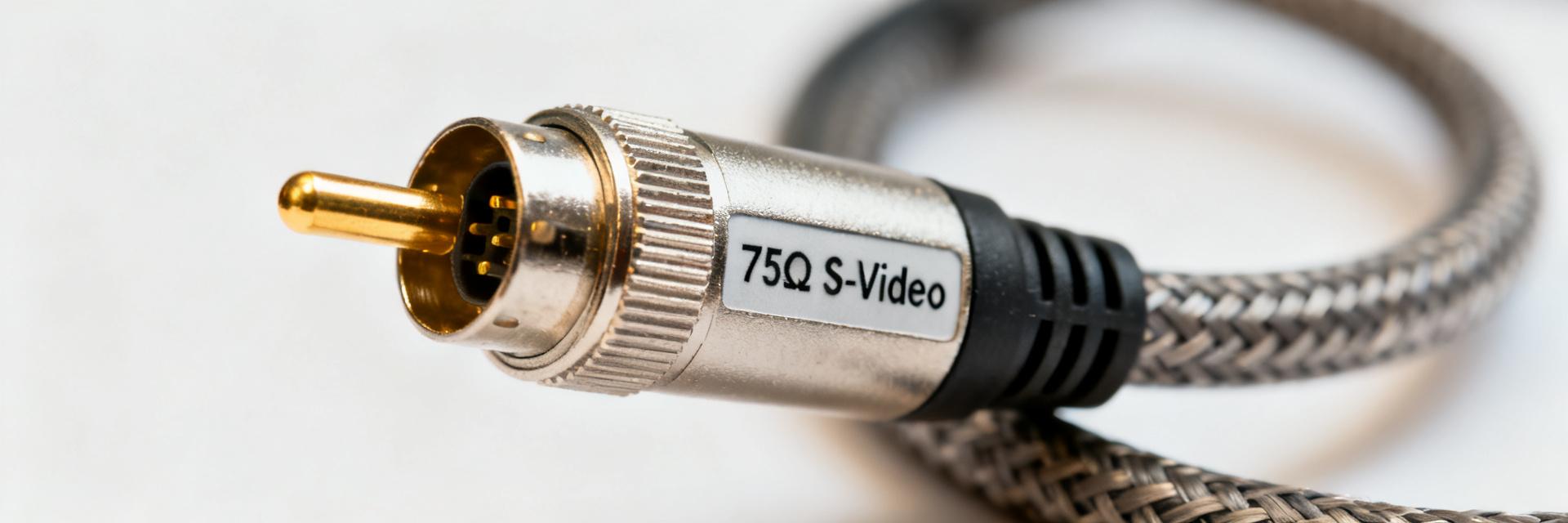
(1.1) Product form factor & connector summary
The AK-AV509 is a round cable assembly built as a Mini‑DIN 4‑pin S‑Video cable intended for Y/C signal runs between legacy sources and sinks. The family typically ships in fixed lengths (common options include 3 ft, 5 m, and 10 m equivalents) with Mini‑DIN 4‑pin male/female terminations matched to consumer and many pro AV devices. The datasheet specifies the Mini‑DIN connector wiring and assembly style rather than a generic description, so installers should confirm connector gender and pinning from the datasheet before ordering to avoid compatibility gaps.
(1.2) Where and why these specs matter
Typical uses include studio patching, AV rack interconnects, field kits for legacy gear, and converter chains. Electrical specs like impedance and shielding determine reflections and noise immunity; mechanical specs like bending radius and connector strain relief determine long-term reliability under repeated patching and transport conditions, especially in racks and field deployments.
(2) Datasheet deep-dive — Key electrical & mechanical specifications for AK-AV509
(2.1) Electrical specs to extract and explain
The datasheet lists the characteristic impedance as 75 Ω (video pairs), a double shielding scheme (foil + braided shield with high coverage), conductor size at AWG 22, and a quoted capacitance and attenuation curve. Characteristic impedance at 75 Ω is critical: any mismatch at connectors or adapters causes reflections and ghosting. Shield coverage and continuity determine immunity to radiated interference and crosstalk in dense racks. Attenuation is provided as dB per length; installers must use the datasheet curve to estimate loss for the intended run length and frequency band when deciding if an amplifier or distribution amp is required.
| Spec name | Datasheet value | Practical impact |
|---|---|---|
| Characteristic impedance | 75 Ω | Matches standard video inputs; reduces reflections when connectors/adapters are 75 Ω rated. |
| Shielding | Foil + braid (high coverage) | Improves noise rejection in rack/field environments; maintain continuity at connectors. |
| Conductor | AWG 22 (solid/stranded) | Affects flexibility and loss; stranded preferred for frequent flexing. |
| Capacitance | ~50 pF/m (datasheet value) | Higher capacitance increases high‑frequency loss; relevant for long runs. |
| Attenuation | Specified curve (dB per 100 ft / per 100 m) | Use to calculate dB loss at target length; drives max unamplified run. |
(2.2) Mechanical & compliance details
The datasheet specifies overall cable diameter, PVC jacket (black common), minimum bending radius (commonly 6–8× cable diameter), and connector mating gender/pinning. Typical part numbers include length suffixes for ordering. The datasheet also states RoHS compliance or lead‑free termination where applicable. Values are provided in both metric and imperial units to match US installation practice while remaining precise for spec verification.
(3) Performance & testing insights (comparative analysis)
(3.1) Expected signal performance vs length and real-world limits
Attenuation, shielding, and connector quality determine maximum practical length for unamplified S‑Video runs. Using the datasheet attenuation curve, estimate total loss (for example: if the datasheet lists 1.5 dB per 100 ft at a given frequency, a 200 ft run yields ~3 dB loss). In practice, keep unamplified S‑Video runs under conservative lengths (typical field guideline: under 100–200 ft depending on source level and equipment sensitivity) or add a buffer amplifier/distribution amp for longer links to preserve chroma/luma separation and minimize sync degradation.
(3.2) Common failure modes & test checklist
Common failures include shield break at strain relief, bent pins at Mini‑DIN connectors, and cable kinking leading to conductor fatigue. A simple 5‑step field test: 1) Visual inspection of connectors and jacket; 2) Continuity check of center conductors and shield; 3) Continuity of pin mapping between ends; 4) Insert known‑good test pattern source and verify luma/chroma; 5) If available, measure return loss/attenuation on a bench analyzer to confirm datasheet performance.
(4) Compatibility & installation guide (method-oriented)
(4.1) Pinout, wiring, and matching impedance
Verify Mini‑DIN 4‑pin wiring against the datasheet pinout to ensure Y (luma) and C (chroma) lines map correctly between devices. Impedance matching is essential when connecting to converters, splitters, or composite adapters: use 75 Ω‑rated adapters and avoid passive gender adapters that change pin mapping or break shield continuity, which introduces reflections and hum.
(4.2) Practical installation tips and connectors/adapters guidance
Use proper strain relief and avoid tight bends near connectors; maintain minimum bending radius and route away from mains or large current cabling to reduce interference. When adapters are required, prefer purpose‑built 75 Ω Mini‑DIN adapters; avoid chain‑adapting through multiple gender or pin‑swapping adapters that can compromise impedance and pin mapping.
(5) Buying checklist & maintenance recommendations (action-oriented)
(5.1) Quick purchase checklist
Before purchasing, confirm these from the datasheet: 75 Ω impedance, attenuation per length (use the provided dB curve), shielding type and coverage, connector type/gender and verified pinout, available lengths and part‑number suffixes, and RoHS/lead‑free statements. Compare datasheet figures rather than relying on generic product blurbs when selecting cabling for mission‑critical installs.
(5.2) Care, storage, and lifecycle notes
Store coiled with a large radius, avoid tight kinks, keep connectors dry and capped, and label cables for length and use. Inspect strain relief and shielding continuity periodically; follow local regulations for disposal if the part lists specific lead or material handling notes in the datasheet.
Summary / Conclusion
The AK-AV509 datasheet highlights the critical specs that determine S‑Video signal integrity: 75 Ω characteristic impedance, robust shielding, conductor size, and attenuation versus length. For reliable installs, verify pinout and connector gender, calculate expected loss using the datasheet attenuation curve, and follow the field checklist to validate each cable. Prioritize datasheet values during procurement and run a bench verification before large deployments.
Key summary
- Confirm 75 Ω impedance and matching adapters to avoid reflections and ghosting on S‑Video cable links.
- Use the datasheet attenuation curve to estimate loss for the intended run length and add amplification if needed.
- Inspect shielding continuity and strain relief; common failures occur at connector terminations and tight bends.
- Verify Mini‑DIN 4‑pin pinning from the datasheet to ensure correct Y/C mapping between devices.
常见问题解答
What run length can the AK-AV509 support without amplification?
Maximum unamplified length depends on the datasheet attenuation curve and the frequency content of the S‑Video signal; practical field guidance is to limit runs to conservative distances (often under 100–200 ft) for full‑quality picture, and to calculate expected dB loss from the datasheet for precise planning.
How critical is shielding on an S-Video cable like the AK-AV509?
Shielding is critical in noisy environments (racks, near power runs, field kits). Datasheet‑specified foil plus braid shielding provides high coverage and reduces radiated and conducted interference, preserving chroma/luma separation and reducing cross‑talk and hum.
What quick tests validate AK-AV509 performance in the field?
Perform a five‑step check: visual inspection, conductor and shield continuity, pin mapping verification, known‑good source signal test, and—if available—bench measurement of return loss/attenuation to confirm the cable meets datasheet performance before deployment.


